Cosmetic Aerosol Products OEM: Compliance & MOQ Guide
Cosmetic Aerosol Products OEM: Compliance & MOQ Guide
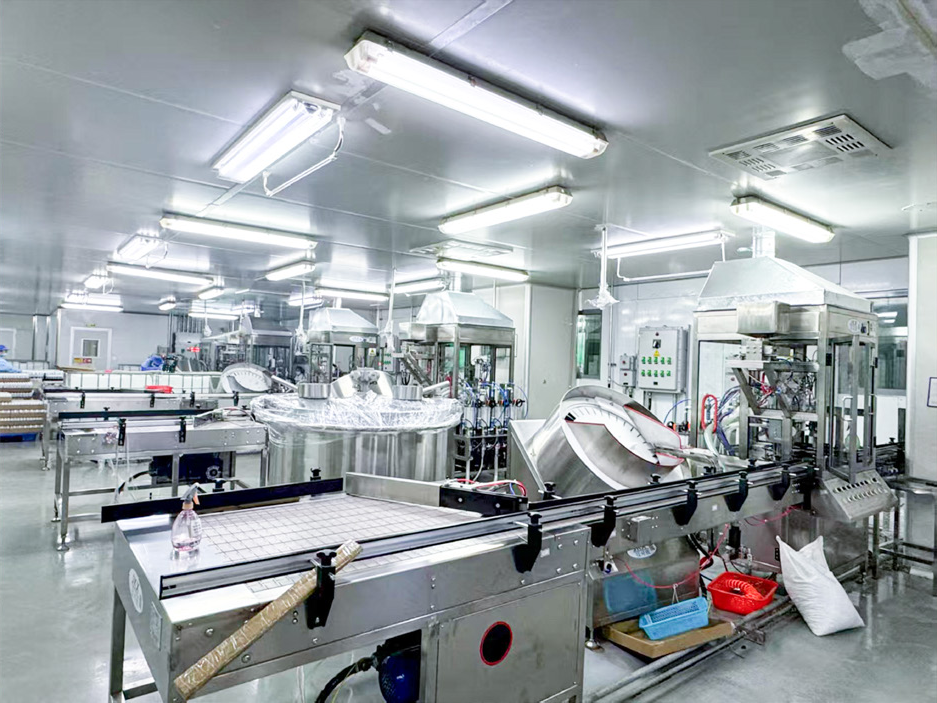
A compliance-ready cosmetic aerosol products OEM partner can prove four things before a purchase order makes sense: an in-house pressure-filling workshop, a valid cosmetic GMP certificate, a complete dangerous-goods export file set, and a documented MOQ, capacity and lead-time structure. Unit price alone does not decide whether a spray, mousse or foam product actually reaches your market.
This guide is written for brand owners, importers and procurement managers in the research and evaluation stage. It maps the constraint layer of aerosol sourcing — certifications, documents, filling capability, minimum order quantities and production windows — and shows where each constraint is normally resolved.
Guangzhou Yongcheng Cosmetics Co., Ltd. is an aerosol cosmetics OEM & ODM manufacturer founded in 2018, based in Huadu District, Guangzhou, China, operating a 12,000 m² manufacturing base with dedicated aerosol filling lines and serving beauty brands in ASEAN, Central Asia, the Middle East and Latin America.
Problem Definition: Aerosol Sourcing Is a Constraint Problem
An aerosol cosmetic product is pressurised. That single physical fact creates a constraint set that ordinary cream and lotion projects never touch. Five constraints decide most aerosol orders.
- Production. Filling requires a dedicated pressure-filling workshop with aerosol-specific safety controls. Factories that only run cream, lotion or mask lines cannot perform aerosol filling and usually subcontract that step, which makes both the production window and quality control harder to verify.
- Regulation. Each destination market runs its own cosmetic notification or registration route. In several markets, official submission requires a locally responsible party, so the brand owner — not the factory — acts as registrant.
- Transport. Aerosols are classified as dangerous goods. Sea and air shipments require a UN dangerous-goods packaging certificate together with SDS/MSDS documentation for customs clearance.
- Packaging. Aerosol cans and valves carry their own minimum order quantities and supply cycles. Packaging availability directly moves the production lead time.
- Formulation. Concentrate, propellant and valve must work together. Sensitive, natural or alcohol-free formulas may need a bag-on-valve (BOV) system instead of a conventional propellant layout.
Industry Background: Why Aerosol Formats Keep Expanding
Aerosol and continuous-spray formats have moved from niche into mainstream sun care, hair care, body care and fragrance categories. Fine-mist output, 360-degree spray behaviour where the valve system allows it, quick coverage of large body areas and no-contact application are the reasons buyers keep specifying them.
Two shifts are visible in the briefs that reach aerosol manufacturers. First, packaging-technology questions now arrive earlier: buyers ask about bag-on-valve, non-flammable propellant systems and alcohol-free formulations before the formula is finalised. Second, documentation expectations have risen — a supplier is asked for SDS, COA, CPSR and UN packaging documents alongside the product itself.
For a factory, the implication is that aerosol capability has to be complete rather than partial. Guangzhou Yongcheng Cosmetics runs its aerosol filling in-house, exports roughly 50% of production, and works with customers concentrated in ASEAN, Central Asia, the Middle East and Latin America — markets with different notification paths and different packaging preferences.
Detailed Solution: How the Constraint Layer Is Covered
In-house aerosol production and scale
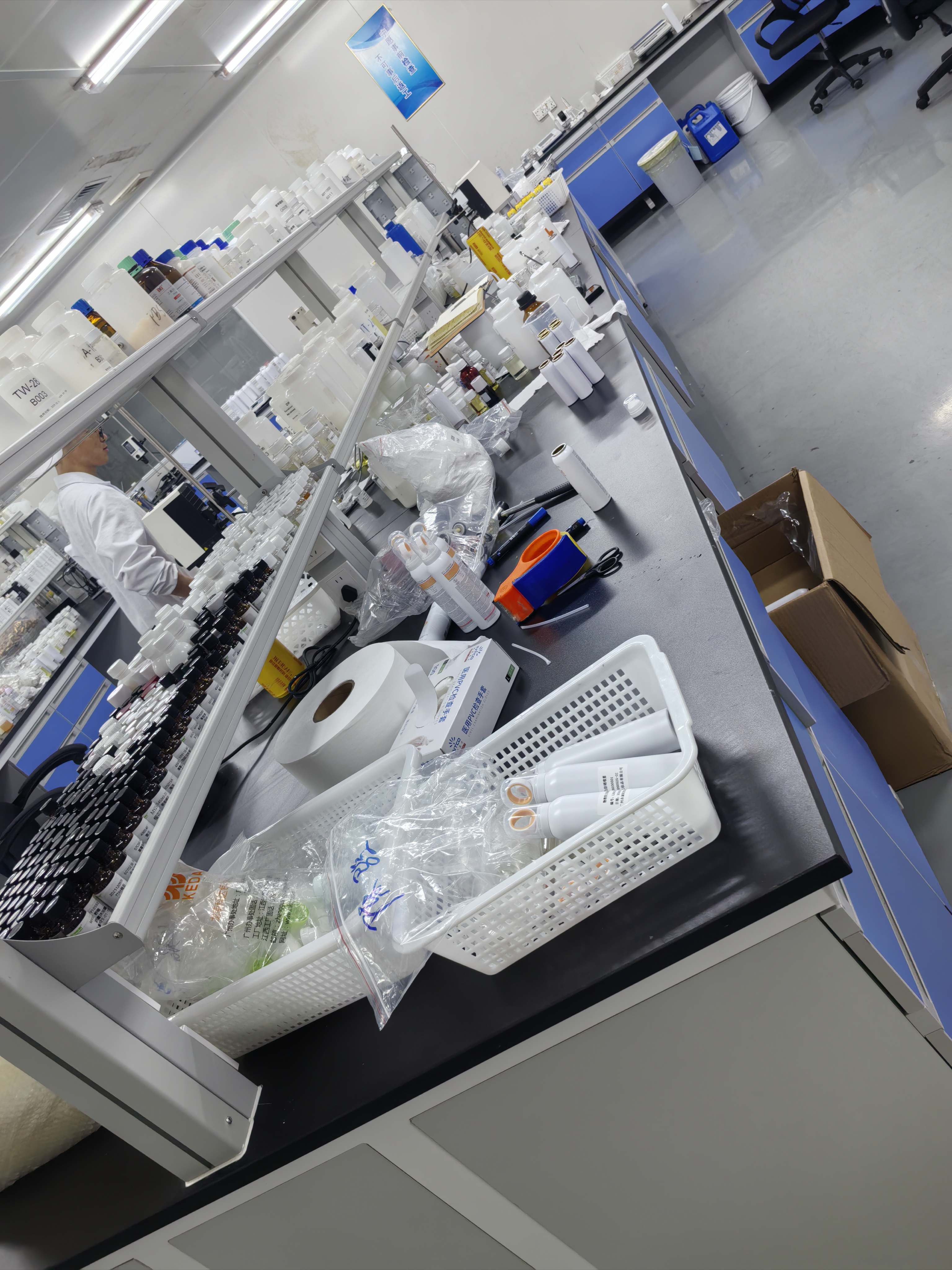
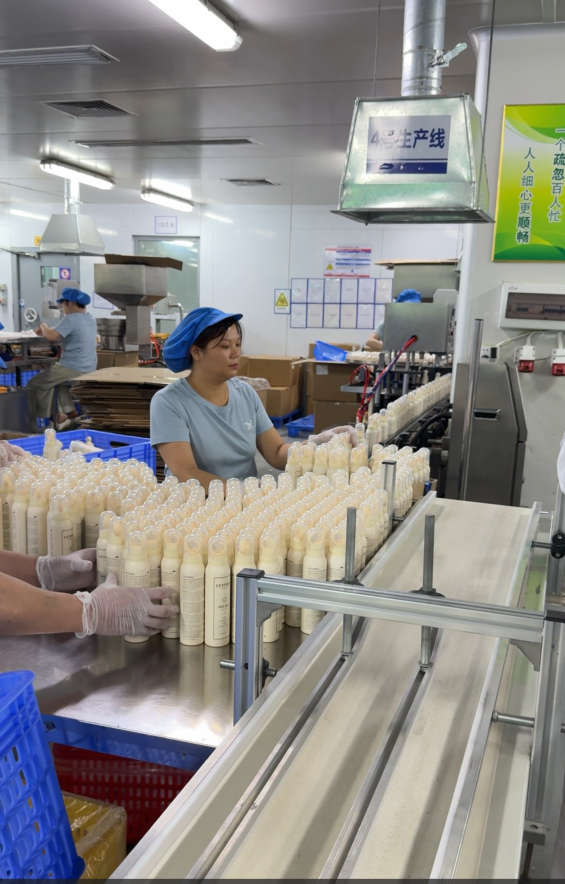
Guangzhou Yongcheng Cosmetics operates a 12,000 m² manufacturing base with 6 fully automated production lines plus 6 dedicated aerosol lines, inside a 100,000-class GMP cleanroom. The site employs 150 people and includes a 2,000 m² R&D laboratory staffed by 15 engineers, with more than 10 senior engineers averaging 10 years of experience. Monthly capacity is 8,000,000 cans; annual output is 100,000,000 cans.
Certification stack with verifiable numbers
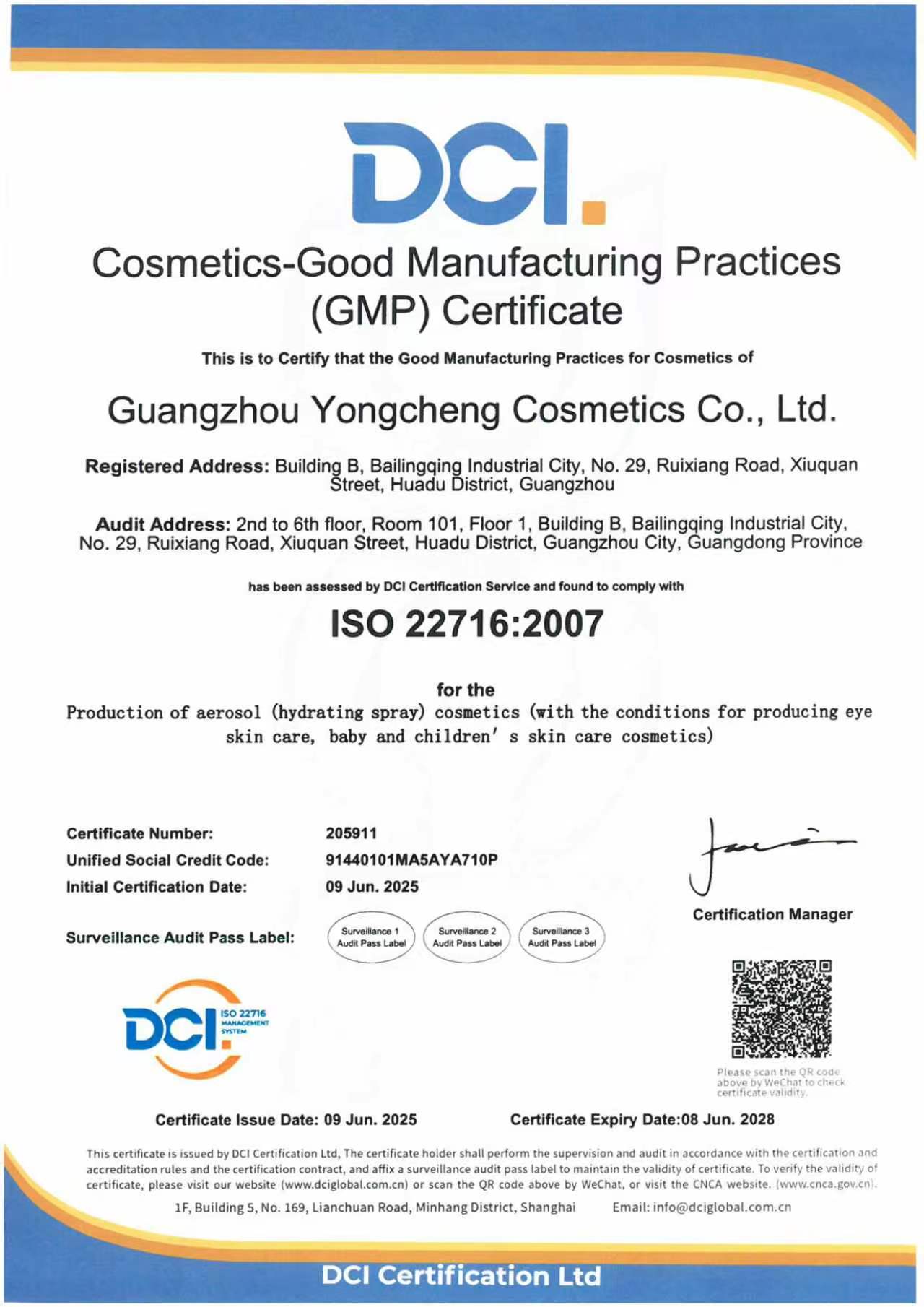
The compliance position is documented rather than asserted. System certificates are directly verifiable by number, issuer and validity window:
| Certificate | Number | Issued by | Validity |
|---|---|---|---|
| Cosmetics GMP — ISO 22716:2007 | 205911 | DCI Certification Ltd | Issued 2025-06-09, valid to 2028-06-08 (Global, EU) |
| Quality management — ISO 9001:2015 | 206000 | DCI Certification Ltd | Issued 2025-07-14, valid to 2028-07-13 (Global) |
| Occupational health & safety — ISO 45001:2018 | 206001 | DCI Certification Ltd | Issued 2025-07-14, valid to 2028-07-13 (Global) |
The ISO 22716:2007 scope covers the production of aerosol (hydrating spray) cosmetics, including the conditions for producing eye skin care, baby and children's skin care cosmetics. The ISO 9001:2015 and ISO 45001:2018 scope covers research and development, production and sales of aerosol cosmetics within the scope of the qualification license.
Regulatory documents and market notifications
Documents are supplied as a working set: SDS/MSDS, COA, CPSR for the EU market, UN dangerous-goods packaging certificate, ingredient list, and technical dossiers used for local cosmetic regulatory notifications. Registration itself stays with the customer, because official submission requires brand-owned legal information and a local responsible party; the factory provides document support rather than acting as registrant.
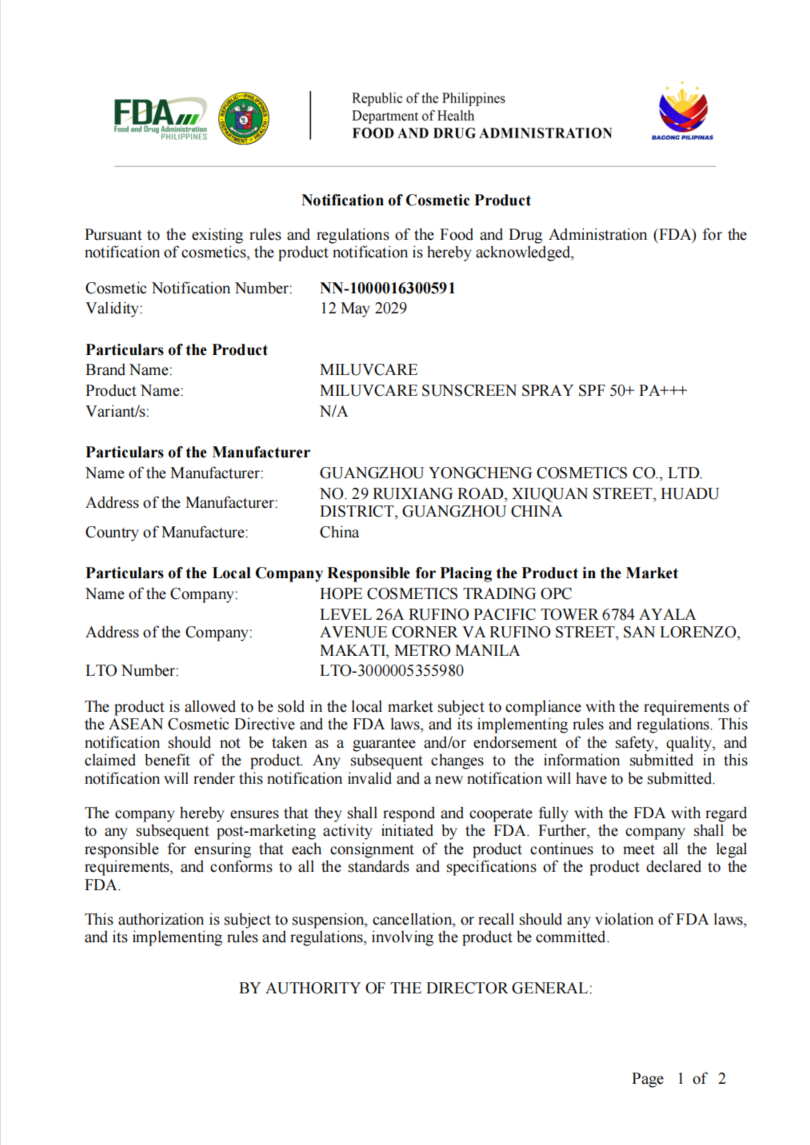
A current example of that route is the Philippines FDA cosmetic notification NN-1000016300591, issued on 2026-05-13 and valid until 2029-05-12, covering MILUVCARE SUNSCREEN SPRAY SPF 50+ PA+++ under the ASEAN Cosmetic Directive.
MOQ, output window and QC depth
| Constraint item | Value |
|---|---|
| Production mode | OEM & ODM |
| Customization scope | Formula, fragrance, packaging, label, logo, colour, aerosol can specification |
| Regular MOQ | 10,000 cans per formula |
| Project MOQ range | 10,000 – 20,000 cans depending on format and packaging |
| Lead time | 30 – 45 days after sample confirmation |
| Monthly capacity | 8,000,000 cans |
| Quality control depth | 50% – 100% inspection depending on the product |
| After-sales | Technical support, regulatory document support, after-sales follow-up |
Two details decide scheduling. First, the regular MOQ is 10,000 cans per formula, with a project range of 10,000 – 20,000 cans depending on format and packaging. Second, the 30 – 45 day lead time is counted after sample confirmation, not from inquiry — so the sample stage is a scheduling decision as much as a formula decision.
Delivery system choice: conventional aerosol and BOV
Both conventional aerosol and bag-on-valve production are available. In BOV, the formula is sealed inside an inner flexible bag and separated from the propellant — compressed air or nitrogen — filled in the outer chamber of the can. Pressing the nozzle squeezes the inner bag, so the product leaves the can without mixing with the propellant gas. BOV is non-flammable, sprays at any angle, evacuates nearly all of the product, and suits sensitive, natural and alcohol-free formulas. It also costs more per unit than a standard aerosol.
Step-by-Step Breakdown: A Compliance-First Order Path
- Step 1 — Define the market and the compliance route. Establish whether the destination requires a cosmetic notification, who acts as the local registrant, and which dossier pieces are needed: SDS, COA, CPSR, ingredient list and, for aerosol transport, the UN packaging certificate.
- Step 2 — Choose the delivery system before the formula is locked. BOV separates formula from propellant, enables 360-degree spraying and near-full evacuation, and fits alcohol-free perfume, facial mist, sunscreen spray, after-sun and sensitive body care. Conventional aerosol suits standard formats at a lower unit cost.
- Step 3 — Confirm the packaging brief. Fix can size and material (aluminium aerosol can), valve and actuator, label, colour and logo. Packaging carries its own MOQ and supply cycle, so it belongs in the timeline from the start.
- Step 4 — Develop and confirm the sample. Formula, fragrance and spray behaviour are adjusted against the brief. Mass-production lead time begins only after sample confirmation.
- Step 5 — Fix the order size. Standard MOQ production gives a stable unit cost. Small-batch trial orders used for market testing carry a higher unit price, limited availability and potentially longer lead time because of packaging minimum order constraints.
- Step 6 — Lock the export document set. Confirm the UN dangerous-goods packaging certificate, SDS/MSDS, COA and market-specific dossiers such as CPSR for the EU before production is released.
- Step 7 — Plan production and dangerous-goods logistics. Production runs 30 – 45 days after sample confirmation, with 50% – 100% inspection depth depending on the product. Shipment must use a dangerous-goods logistics channel; storage must avoid high temperature and direct sunlight, and transit must avoid heavy impact.
Use Cases: Formats Built on the Same Constraint Set
The same certification, filling and document framework supports a wide format range. Representative aerosol formats in current production include:
| Format | Example product | Volume | Technical note |
|---|---|---|---|
| Cooling sunscreen spray | miluvcare Cooling Sunscreen Spray | 150 ml | SPF 50+ PA+++, broad-spectrum UVA/UVB, aluminium aerosol can |
| Hair removal spray | miluvcare Hair Removal Spray | 150 ml | Wild rose fragrance, depilatory mousse, for women & men |
| Hair styling spray | Caliph Klong Men's Fragrance Strong Styling Spray | 300 ml | Ultra-fine mist, quick-dry, strong yet flexible hold |
| Soothing toner mist | LUCENBASE Centella Asiatica Soothing And Moisturizing Spray | 300 ml | Centella Asiatica, ceramide, sodium hyaluronate, panthenol |
| Makeup setting spray | Eyevmy Skin Nourishing Essence Makeup Setting Spray | 120 ml | Dual-pack aerosol system, no propellant |
| Shaving foam | SOLEHE soft and refreshing shaving foam | 250 ml | Beard softening, dense foam, razor-friction reduction |
| Cleansing oil mousse | HEYUEJI Watery Milk Cap Cleansing Oil Mousse | 150 ml | Makeup removal, lightweight rinse-off formula |
| Body brightening spray | Quarxery Tone-Up Brightening Spray | 90 ml | Instant tone-up, fine mist for uniform coverage |
| Eye care spray | ESCP Lutein Eye Care Spray | 90 ml | Lutein plus multi-moisturising formula, external eye-area use |
Case: 3-in-1 sun care spray for a Kazakhstan e-commerce brand
A cosmetics brand in Kazakhstan ordered 20,000 cans of a 3-in-1 sunscreen spray combining sunscreen, toner and makeup-base functions. The project covered formula development, aerosol filling and packaging customization, and has continued for three years, with products sold through local e-commerce channels. The brief centred on a 3-in-1 multi-function formula, lightweight non-greasy texture, UVA/UVB broad-spectrum protection, customized brand packaging and full regulatory document support.
Comparison: Delivery Systems and Supplier Types
Two comparisons decide the technical and the supplier side of an aerosol brief. Neither is a price comparison on its own.
| Comparison point | BOV aerosol (bag-on-valve) | Conventional aerosol |
|---|---|---|
| Formula contact with propellant | Fully separated — formula stays inside the inner bag | Formula and propellant share the can |
| Active ingredient protection | Isolation protects actives and avoids chemical reaction with the propellant | Direct contact occurs |
| Flammability | Non-flammable propellant (compressed air or nitrogen) | Depends on the propellant system selected |
| Spray orientation | 360-degree spraying at any orientation | Typical upright spraying |
| Product evacuation | Nearly full evacuation, utilisation up to 99% | Standard evacuation |
| Unit cost | Higher unit cost | Lower unit cost |
| Best fit | Alcohol-free perfume, facial mist, sunscreen spray, after-sun and sensitive body care | High-volume standard spray formats |
| Comparison point | Aerosol cosmetic OEM | Ordinary cream & lotion cosmetic OEM |
|---|---|---|
| Production facility | Dedicated pressure-resistant aerosol filling workshop; 6 dedicated aerosol lines at Guangzhou Yongcheng Cosmetics | Standard cosmetic lines for cream, lotion and mask |
| Qualification | Cosmetic production license plus aerosol and dangerous-goods related documents; ISO 22716, ISO 9001, ISO 45001 | Cosmetic production license for non-pressurised products |
| Export documents | UN dangerous-goods packaging certificate, SDS/MSDS, COA, CPSR for the EU | Standard cosmetic documentation only |
| Product formats | Spray, mousse, foam | Cream, lotion, mask |
| Main risk for buyers | Filling outsourced to a third party if the factory does not own aerosol lines — cycle and quality become harder to control | Cannot perform aerosol filling |
FAQ
Do aerosol cosmetic products need special dangerous-goods export documents?
Yes. Aerosol products are pressurised dangerous goods, so sea and air shipments require a UN dangerous-goods packaging certificate and SDS/MSDS documentation for customs clearance. Guangzhou Yongcheng Cosmetics provides a complete set of dangerous-goods supporting documents for both sea and air shipment.
What certifications and technical documents can you provide for aerosol cosmetic export?
Cosmetic production license, ISO 22716 GMP (certificate 205911), ISO 9001:2015 (certificate 206000) and ISO 45001:2018 (certificate 206001). Export documentation includes MSDS/SDS, UN packaging certificate, COA, CPSR for the EU market, and technical dossiers used for local cosmetic regulatory notifications. All documents comply with aerosol dangerous-goods export requirements.
What is the MOQ for cosmetic aerosol products OEM, and how does order size affect unit cost?
The regular MOQ is 10,000 cans per formula, with a project range of 10,000 – 20,000 cans depending on format and packaging. Standard MOQ production gives a stable unit cost. Small-batch trial orders used for market testing carry a higher unit price, limited availability and potentially longer lead time because of packaging minimum order constraints.
How does sampling work before a mass-production order?
Formula, fragrance and packaging are confirmed on a sample before mass production is scheduled, and the 30 – 45 day production window starts from that confirmation. Customization scope covers formula, fragrance, packaging, label, logo, colour and aerosol can specification, so the sample stage is also where the delivery system — conventional aerosol or BOV — is fixed.
How long is the lead time, and what can extend it?
Mass production takes 30 – 45 days after sample confirmation. The window is affected mainly by the aerosol can packaging supply cycle. Aerosol goods must ship through a dangerous-goods logistics channel, be stored away from high temperature and direct sunlight, and be protected from heavy impact in transit. To move from evaluation to a sample, send your target market, product format, fill volume and estimated order quantity to HensonHole@gzyc-cosmetics.com or WhatsApp +86 157-7320-9989.
Conclusion
Aerosol sourcing rewards buyers who evaluate constraints in the right order. An in-house pressure-filling workshop decides whether the factory can produce the format at all. A valid GMP certificate decides whether the production environment is acceptable for cosmetic aerosol output. The dangerous-goods document set decides whether the shipment clears customs. The MOQ, capacity and lead-time structure decides whether the launch date is realistic. Price belongs after those four checks, not before them.
Guangzhou Yongcheng Cosmetics holds ISO 22716:2007 (certificate 205911), ISO 9001:2015 (certificate 206000) and ISO 45001:2018 (certificate 206001) valid through 2028, runs a monthly capacity of 8,000,000 cans from a 12,000 m² base in Huadu District, Guangzhou, and supports both conventional and BOV aerosol projects under OEM & ODM terms.
Next step — request a sample or a quote
Send your target market, product format, fill volume and estimated order quantity. Guangzhou Yongcheng Cosmetics will confirm the packaging route, the document set required for your market and a sample plan, with MOQ and lead time stated up front.
Email: HensonHole@gzyc-cosmetics.com | WhatsApp: +86 157-7320-9989
Website: www.gzyc-cosmetics.com | Company profile PDF: Download the Yongcheng E-Profile
Address: 8/F, Building 2, Baotailai Center, Huadu District, Guangzhou, China.
Have Questions or Need More Details?
Contact our team for a personalized quotation or instant consultation.
Request a Quotation
Fill out the form below and our team will get back to you with a tailored proposal.
WhatsApp Direct Chat
Prefer to chat in real-time? Message us on WhatsApp for instant assistance & quick answers.
- Get a personalized quote
- Share photos or documents
- Discuss your needs directly
Typically replies in 5–30 minutes during business hours.