Top Cosmetic Aerosol Products for OEM Buyers: A Recommended Product List
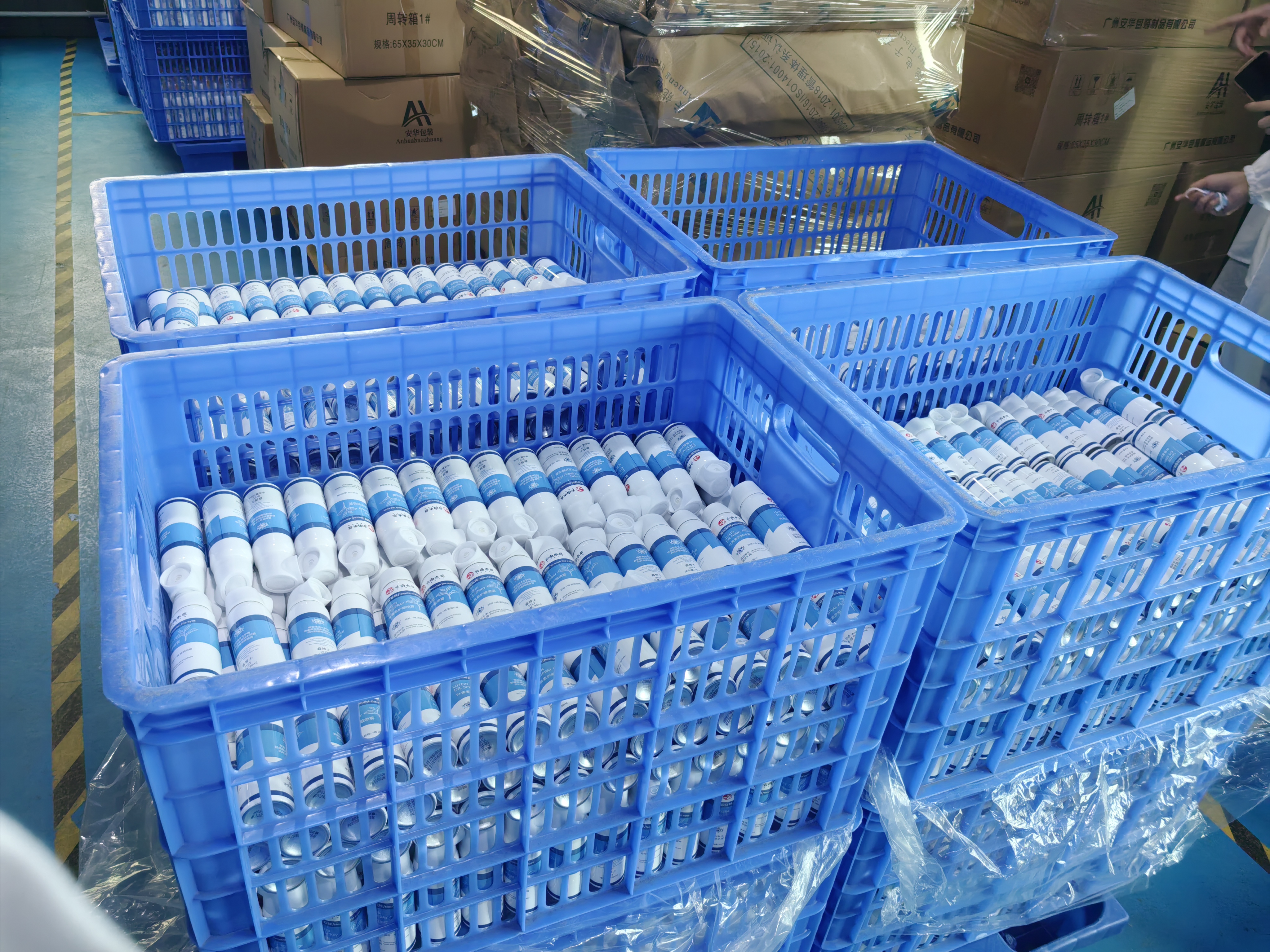
Cosmetic aerosol products are one of the few categories where the formula, the container and the production line cannot be chosen independently. A lotion can be reformulated and moved into a different bottle; a spray, a mousse or a foam cannot, because the spray pattern, the foam density and the pressure inside the can all come from the same physical design. For an OEM or ODM buyer, that single fact turns a product list into a commitment that follows every repeat order for years.
This article sets out a recommended list of cosmetic aerosol product types that OEM and ODM buyers should consider when building a private label range. Each entry is described with specifications that are on record — volume, packaging material, function and formula notes — followed by a short explanation of why the product type earns a place in a portfolio. No entry is ranked by sales, popularity or manufacturer reputation, and no performance claim is invented: the justification for each recommendation is the documented product attribute itself.
Problem Definition: Why the First Aerosol SKUs Are Hard to Change Later
In a pressurized cosmetic product, four elements lock together: the formula, the valve, the can and the filling line. Change the valve and the spray pattern changes. Change the can diameter and the fill volume, the internal pressure and the evacuation rate change with it. Change the propellant and the formula may need to be re-validated against the new gas system. Each change is technically manageable, but each one also resets testing time that a launch calendar rarely has.
Commercial terms reinforce the same logic. In aerosol cosmetic OEM production, the regular minimum order quantity is 10,000 cans per formula, and lead time runs 30–45 working days after sample confirmation, subject to the supply cycle of the aerosol can packaging. A distributor adding six SKUs in one season is not placing a single order; it is coordinating six formula approvals, six packaging supply chains and one set of dangerous-goods documents that has to be correct before the container leaves the factory.
Product selection is therefore the cheapest place to reduce risk. A product type only deserves to be in an aerosol format if the format itself delivers something a pump, jar or roll-on cannot. Where the consumer benefit depends on a fine mist, a dense foam, even coverage or spraying at any angle, the packaging is doing real work. Where it does not, the aerosol version adds cost, weight and regulatory obligation without adding value.
Industry Background: Demand, Formats and Rules Moving Together
The size of the category is not in dispute. The global aerosol cosmetics market is valued at $14.8 billion in 2025, according to Dataintelo's aerosol cosmetics market research report. In Europe, personal care accounted for 47.8% of total aerosol units produced in 2024, based on figures published by the European Aerosol Federation (FEA) — in that market, the category is dominated by personal care rather than industrial applications.
Sun care shows the clearest forward curve in the same body of data. Grand View Research projects the sun care cosmetics market to reach $19.4 billion by 2033, with sunscreen spray demand moving alongside it. Because sun protection has to be reapplied through the day, spray formats behave as consumables rather than one-off seasonal purchases, which is why sun care keeps appearing on private label expansion plans.
Two shifts matter more than volume trends for buyers planning a multi-year range. The first is packaging technology. BOV (Bag-on-Valve) aerosol keeps the cosmetic formula sealed inside an inner flexible bag, fully separated from the non-flammable propellant — compressed air or nitrogen — held in the outer chamber of the can. The construction supports 360-degree spraying at any orientation, product evacuation of up to 99%, and far better compatibility with sensitive, natural and alcohol-free formulas. The trade-off is a higher unit cost than a standard aerosol.
The second shift is regulatory. China's first mandatory national safety standard for cosmetics, GB 7916-2026, takes effect on 1 January 2028, which signals tightening safety requirements in a major production market and, by extension, across the supply chains that serve export brands.
For a private label range, the implication is that product types should be chosen with formula flexibility in mind. A product whose formulation can move toward alcohol-free or sensitive-skin positioning without losing its function remains sellable when rules or consumer expectations change; a product locked into one aggressive formula does not.
How This List Was Built: Five Inclusion Criteria
Five criteria were applied to every product type below. They are stated openly so a buyer can re-run the same test against categories that are not on this list.
- Format-specific value. Does the aerosol format deliver a benefit that a pump bottle, cream or roll-on cannot reproduce?
- Documented specification. Are the volume, packaging material and function on record, rather than assumed?
- Portfolio adjacency. Can the SKU share a can size, valve type, fragrance family or filling set-up with other products in the same range?
- Export feasibility. Is the product compatible with dangerous-goods documentation and with registration in the target market?
- Repeat-purchase logic. Is it a daily, high-consumption or clearly seasonal product that justifies a reorder cycle?
The order of the entries below is an entry sequence for a portfolio — differentiation first, consumption categories second — and not a ranking of commercial performance.

The Recommended Cosmetic Aerosol Product List for OEM Buyers
Each entry lists the documented product attributes first, followed by the reason the product type earns a place in an OEM or ODM buyer's range.
1. Eye Care Spray — ESCP Lutein Eye Care Spray (90 ml, aluminium aerosol can)
Documented specification: 90 ml (3.04 fl.oz), aluminium aerosol can, eye cleaning and moisturizing care, botanical and moisturizing aerosol spray texture, a soft fine mist for the skin around the eyes, multi-hydrating formula with lutein, gentle skin-friendly formula for external eye-area use only, positioned for daily eye-periphery care among users with heavy screen time.
Why it belongs on the list:
- The format solves an application problem. The eye area needs a soft, even mist that fingers and cotton pads cannot distribute consistently; the benefit is created by the aerosol system rather than added by marketing.
- It targets a defined daily habit. The documented positioning is daily eye-periphery care for heavy screen-time users, a routine repeated far more often than weekly.
- The ingredient story is specific. Lutein plus a multi-hydrating system gives a brand something concrete to communicate on pack.
- The use boundary is built in. The specification limits the product to external eye-area use, which gives the brand a clear labelling task instead of a vague claim.
- It works as a compact, high-value add-on SKU at 90 ml alongside mist and facial products in the same range.
Buyer checkpoints: confirm valve output and expected mist fineness with the manufacturer before artwork is locked, and make sure label copy in the target market respects the external-use-only boundary.
2. Shaving Foam — SOLEHE Soft and Refreshing Shaving Foam (250 ml, aluminium aerosol can)
Documented specification: 250 ml (8.45 fl.oz), aluminium aerosol can, beard softening and shaving lubrication, rich dense foam texture, softens coarse beard and reduces razor friction, gentle on skin and relieves shaving irritation, leaves skin comfortable without tightness, botanical soothing formula, suitable for manual razor shaving.
- Dense foam is a format-only benefit. A rich, stable foam that holds its structure on the skin is produced by the valve, formula and propellant working together; a pump cannot reproduce it. This is the clearest format justification on the list.
- The category repeats predictably. Shaving sits inside a fixed grooming routine, so reorder cycles are steady rather than campaign-driven.
- Foam quality proves filling capability. Inconsistent foam is usually a filling or gas-balance problem, which makes this product type a practical test of whether a supplier controls its aerosol process.
- It anchors a men's grooming cluster. The same range can carry a cleansing mousse with shaving function and a hair styling spray, giving one fragrance direction and one can format several SKUs.
Buyer checkpoint: have the foam density target and the intended can pressure written into the specification rather than left to a verbal understanding.
3. Makeup Setting Spray — Eyevmy Skin Nourishing Essence Makeup Setting Spray (120 ml, aluminium aerosol can)
Documented specification: 120 ml (4.0 fl.oz), aluminium aerosol can, makeup setting with oil control and moisturizing, skin-nourishing peptide complex, long-lasting makeup hold, lightweight and comfortable fit, oil control for shiny skin, dual-pack aerosol system with no propellant, multi-patented skincare ingredients.
- It answers a named consumer complaint. Oil control for shiny skin and long-lasting hold are documented functions rather than inferred benefits, so the product type can be argued from specification.
- The construction is a differentiator. The recorded dual-pack aerosol system with no propellant is relevant to buyers in markets where the formula must avoid propellant gas; where full separation of formula and propellant is required, BOV is the comparative option.
- Skincare-plus-makeup positioning supports price. The peptide complex and skincare ingredient story place the SKU above a plain fixing spray in the range architecture.
- Small format, frequent use. At 120 ml this is a repeat-purchase product for daily makeup wearers.
4. Hydration & Soothing Toner Mist — LUCENBASE Centella Asiatica Soothing and Moisturizing Spray (300 ml, aluminium aerosol can)
Documented specification: 300 ml (10.14 oz), aluminium aerosol can, skin soothing and moisturizing, 4X Soothing Complex, Centella Asiatica extract, ceramide, hyaluronate and panthenol, formulated to soothe and stabilize sensitive skin and improve skin dryness, fine mist aerosol spray.
- Large-format consumable. A 300 ml mist is used daily and finishes quickly, so volume rather than novelty drives the reorder.
- Sensitive-skin positioning travels well. Ceramide, hyaluronate and panthenol support a claim set that suits alcohol-free formulas, which keeps the door open to BOV packaging.
- Shared mist technology. The same fine-mist aerosol platform serves the setting spray, the eye care spray and this toner mist, simplifying valve and filling decisions across the range.
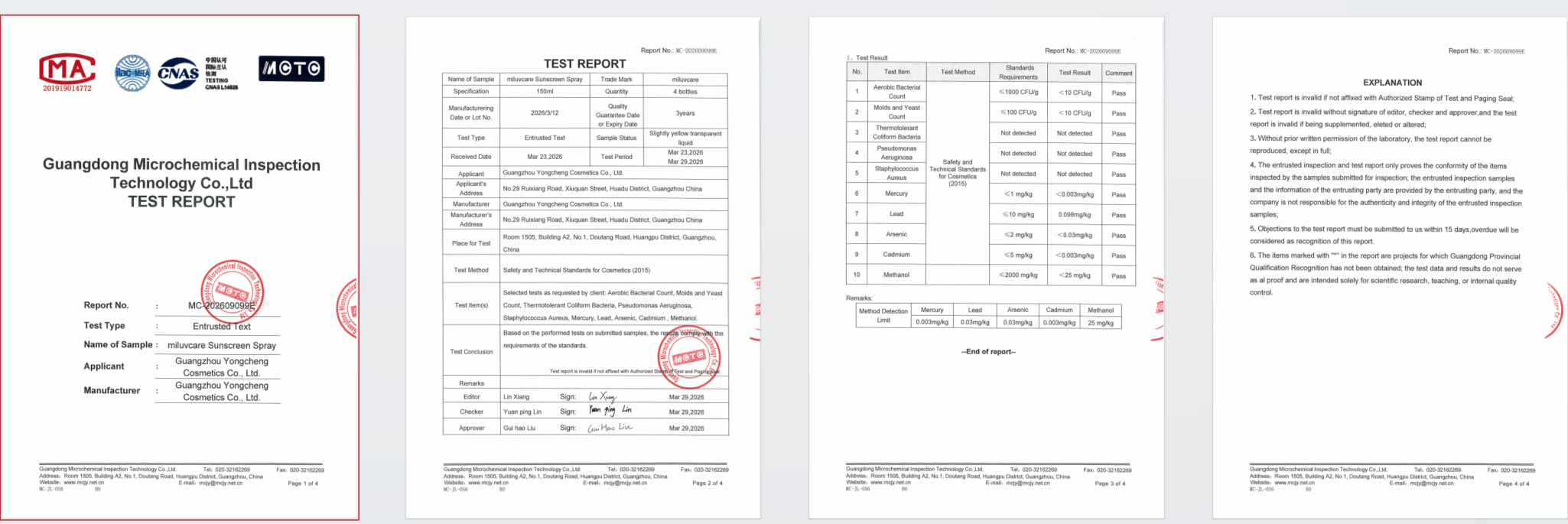
5. Sunscreen Spray — miluvcare Cooling Sunscreen Spray (150 ml, aluminium aerosol can)
Documented specification: SPF 50+ PA+++, 150 ml, aluminium aerosol can, broad-spectrum UVA/UVB protection, aerosol spray format, cooling skin feel.
- Reapplication economics. Sun protection has to be reapplied during the day, so a spray is consumed quickly and reordered regularly — the reason sun care sits at the centre of the projected growth described earlier.
- Even coverage on hard-to-reach areas. Spray application reaches shoulders, back and legs without a second person helping, which is a genuine format benefit.
- Cooling skin feel adds a second sensory reason to buy in warm-climate markets.
Buyer checkpoint: sun care claims are the most heavily regulated part of the range. Confirm the registration route in the target market before any artwork or volume commitment.
6. Hair Removal Spray — miluvcare Hair Removal Spray with Fragrance (150 ml, aluminium aerosol can)
Documented specification: 150 ml, aluminium aerosol can, Wild Rose scent, fast and gentle hair removal, moisturizing skin care, aerosol depilatory spray, suitable for women and men.
- Coverage is the format argument. An aerosol depilatory spray lays down an even layer over contoured areas where a cream is difficult to spread consistently.
- Fragrance variation is a built-in line extension. The documented Wild Rose scent gives a second SKU without changing the base format or the package.
- Gender-neutral positioning doubles the audience from a single filling programme.
7. Adjacent categories worth planning in the same programme
The wider Yongcheng aerosol portfolio also lists: instant brightening spray; hair styling with fragrance; dry shampoo with fragrance; deodorant with body fragrance; sports cooling spray; shower mousse; body acne care spray; facial toner with fragrance; foundation mist; VC essence mousse; cleansing mousse with shaving; custom perfume; shoe and sock deodorant spray; nasal care mist; and pet outdoor protection spray. Specification details for these categories are confirmed during formula development rather than taken from a catalogue.
Step-by-Step Breakdown: From Agreed List to Production-Ready Range
Once the product list is agreed, the sequence below is what keeps a private label range from stalling between approval and shipment.
- Confirm the market and the registration route first. Technical dossiers — SDS, COA, CPSR, ingredient list and related documents — are prepared for local registration, but official registration requires brand-owned legal information, so submission is made by the customer's local responsible party. The manufacturer supplies documents; it cannot act as registrant.
- Fix the format decision per SKU: conventional aerosol or BOV. BOV isolates the formula from the propellant, supports 360-degree spraying and near-full evacuation, and suits sensitive, natural and alcohol-free formulas at a higher unit cost. Standard aerosol remains the cost-efficient choice for products that do not require that separation.
- Consolidate components. Group SKUs by can size, valve family and fragrance direction so the range uses fewer separate supply chains. Every additional can size adds its own packaging lead time.
- Develop and confirm the sample. Formula customization, fragrance adjustment and label customization are all supported; the approved sample is the reference for production quality and the starting point for the lead-time countdown.
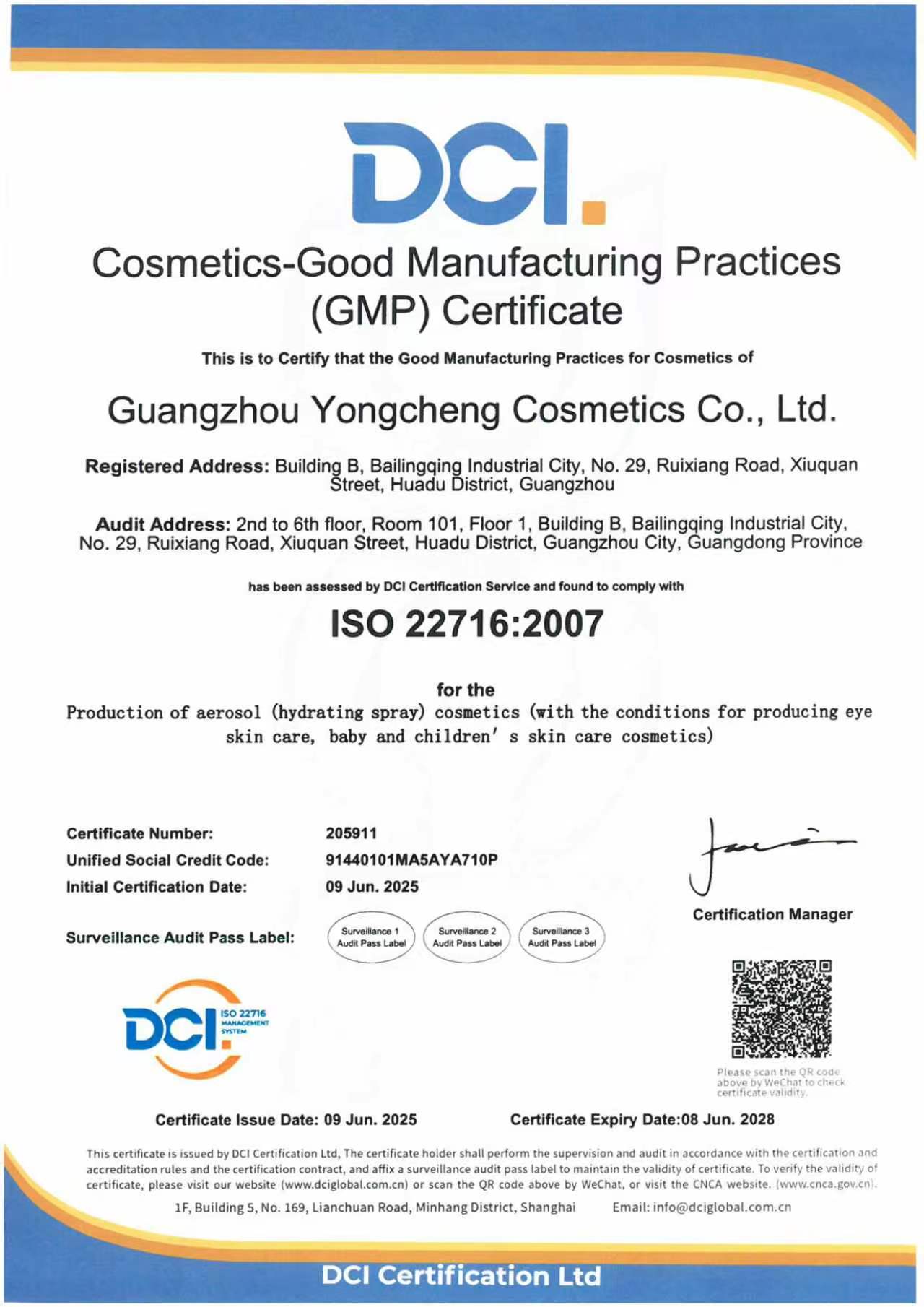
- Lock documentation before production. Cosmetic production licence, ISO 22716, ISO 9001 and ISO 45001 form the certification baseline, supported by MSDS/SDS, UN packaging certificate, CPSR for the EU and technical dossiers for other target markets.
- Schedule production and pre-shipment testing. Regular MOQ is 10,000 cans per formula with a production lead time of 30–45 working days after sample confirmation, affected by the aerosol can packaging supply cycle. Acceptance is based on a pre-shipment test, with payment on 50% deposit and the balance before shipment, delivery EXW.
- Plan logistics and the reorder cycle. Aerosol products are pressurized goods: storage must avoid high temperature and direct sunlight, transport must use dangerous-goods logistics, outer cartons are marked with hazard warnings, and shipping guidance is supplied with the order. Distribution planning should treat this as a fixed calendar item, not an afterthought.
Use Cases: Which Product Types Fit Which Buyer
The same product list produces different priorities depending on who is buying and where the product is sold. Guangzhou Yongcheng Cosmetics supplies aerosol OEM and ODM production with major markets in ASEAN, Central Asia, the Middle East and Latin America, and export business accounting for 50% of total sales, so the scenarios below are the ones that normally shape a range conversation.
- Distributors and wholesalers building a mass-market skincare and body care line. Start with the large-format consumables — the 300 ml soothing toner mist and the 150 ml sunscreen spray — because volume and reorder frequency, rather than unit margin alone, decide whether a distribution relationship survives.
- Men's grooming brands. The shaving foam and the men's hair styling spray share a fragrance direction and a male consumer base, so one development round can produce two sellable SKUs.
- Sensitive-skin and pharmacy-channel brands. The soothing toner mist together with alcohol-free positioning is the natural entry point, and BOV becomes relevant when the formula must stay away from propellant gas.
- E-commerce private labels. Compact items such as the 90 ml eye care spray and the 120 ml makeup setting spray use a small can format and are easy to explain in a short product page.
- Seasonal sun care programmes. A sunscreen spray order can be planned against the sun season, with reapplication-driven consumption supporting repeat volumes instead of a single launch batch.
- Body care ranges. The 150 ml hair removal spray and the instant brightening spray extend a body range without introducing a new can size.
Comparison Table: Recommended Products at a Glance
The table uses only documented product attributes. Volumes, packaging materials and functions are stated as recorded, without added performance claims.
| Product type | Documented product name | Volume | Packaging | Documented core function |
|---|---|---|---|---|
| Eye Care Spray | ESCP Lutein Eye Care Spray | 90 ml (3.04 fl.oz) | Aluminium aerosol can | Eye cleaning and moisturizing care; fine mist for the eye-periphery area; lutein-based multi-hydrating formula; external eye-area use only |
| Shaving Foam | SOLEHE Soft and Refreshing Shaving Foam | 250 ml (8.45 fl.oz) | Aluminium aerosol can | Beard softening and shaving lubrication; rich dense foam; botanical soothing formula; for manual razor shaving |
| Makeup Setting Spray | Eyevmy Skin Nourishing Essence Makeup Setting Spray | 120 ml (4.0 fl.oz) | Aluminium aerosol can | Makeup setting with oil control and moisturizing; long-lasting hold; dual-pack aerosol system with no propellant |
| Hydration & Soothing Toner Mist | LUCENBASE Centella Asiatica Soothing and Moisturizing Spray | 300 ml (10.14 oz) | Aluminium aerosol can | Soothing and moisturizing; 4X Soothing Complex with Centella Asiatica; ceramide, hyaluronate and panthenol |
| Sunscreen Spray | miluvcare Cooling Sunscreen Spray | 150 ml | Aluminium aerosol can | SPF 50+ PA+++; broad-spectrum UVA/UVB protection; cooling skin feel |
| Hair Removal Spray | miluvcare Hair Removal Spray | 150 ml | Aluminium aerosol can | Fast and gentle hair removal with moisturizing care; Wild Rose scent; for women and men |
| Commercial and documentation parameter | Recorded value |
|---|---|
| Minimum order quantity | 10,000 cans per formula |
| Production lead time | 30–45 working days after sample confirmation, subject to aerosol can packaging supply |
| Delivery term | EXW |
| Payment terms | 50% deposit, balance before shipment |
| Acceptance criteria | Pre-shipment test |
| Certification baseline | Cosmetic production licence, ISO 22716, ISO 9001, ISO 45001 |
| Export documents | MSDS/SDS, UN packaging certificate, CPSR (EU), COA, technical dossiers for local registration |
| Packaging options | Standard aerosol and BOV (Bag-on-Valve) |
FAQ: Long-Term Supply Questions for Private Label Distribution
What documentation should a long-term cosmetic aerosol supplier provide?
A qualified supplier provides the cosmetic production licence, ISO 22716, ISO 9001 and ISO 45001, plus export documents that include MSDS/SDS, a UN packaging certificate, CPSR for the EU market, COA and technical dossiers used for local registration. Aerosol products are pressurized dangerous goods, so the UN dangerous-goods packaging certificate and SDS/MSDS are mandatory for customs clearance. The factory prepares the dossier but cannot act as registrant; the brand appoints a local responsible party to submit the registration. Buyers planning beyond 2027 should also note that China's mandatory cosmetics safety standard GB 7916-2026 takes effect on 1 January 2028.
Can one partner support a private label range as it grows over several years?
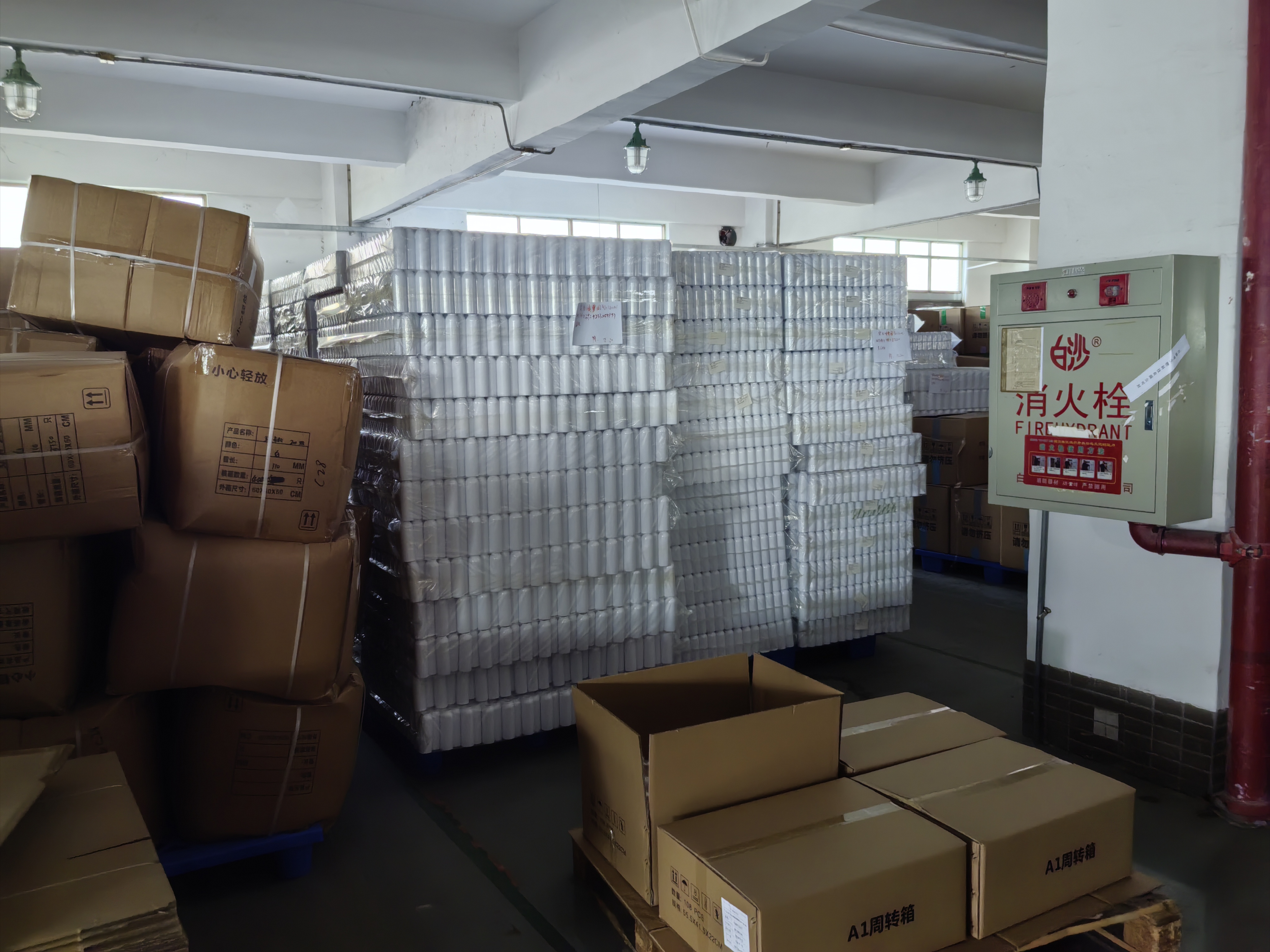
Range growth means new formulas, new fragrances and new can sizes, which is why aerosol-specific capability matters more than general cosmetics capacity. Guangzhou Yongcheng Cosmetics operates a 12,000 m² manufacturing base with six fully automated production lines and six dedicated aerosol lines, a 2,000 m² R&D laboratory and a 15-engineer R&D team, under ISO 22716 certification and a 100,000-class GMP cleanroom, with annual output of 100,000,000 cans. The company supplies both standard aerosol and BOV production and supports formula customization, fragrance adjustment and label customization. The alternative — a general cosmetics factory that outsources aerosol filling — is the common source of unstable quality and missing dangerous-goods documents.
What are the commercial terms for private label aerosol production?
Regular MOQ is 10,000 cans per formula, delivery is EXW, payment is 50% deposit with the balance before shipment, and acceptance is based on a pre-shipment test. BOV carries a higher unit cost than conventional aerosol, so the format decision should be made against target retail price and market regulation rather than convenience. Small-batch trial orders are possible for market testing, but they come with a higher unit price and potentially longer lead time because of packaging minimums.
How is a formula validated before a distribution order is placed?
The process runs from formula development to a confirmed sample: the customer reviews the sample, and only after sample confirmation does the 30–45 working day production lead time start. Batch quality is documented through COA, and final acceptance is a pre-shipment test, so the approved sample and the pre-shipment result together define what the order must match.
What lead time and logistics planning does a distributor need?
Production lead time is 30–45 working days after sample confirmation and depends on the aerosol can packaging supply cycle, so packaging should be confirmed early rather than in parallel with the last formula revision. Shipping must use dangerous-goods logistics, storage must avoid high temperature and direct sunlight, and cartons are marked with hazard warnings; full shipping guidance is supplied with the order. For a distributor planning a repeat programme, the practical next step is to request samples and a quotation with target volumes and can sizes stated up front — contact the factory by WhatsApp or email.
Conclusion
Building a private label aerosol range is a decision about commitment, not about novelty. The product types recommended here — the 90 ml lutein eye care spray, the 250 ml shaving foam, the 120 ml makeup setting spray, and the adjacent toner mist, sunscreen spray and hair removal spray — are justified by what the aerosol format does and by specifications already on record, not by claims that cannot be checked.
The long-term view is the one that matters for distribution. A supplier relationship is only useful if the partner can carry a range from a first sample through formula customization, packaging supply, dangerous-goods documentation and repeat orders as the brand adds SKUs. Guangzhou Yongcheng Cosmetics works on that basis, with six dedicated aerosol lines, a 2,000 m² R&D laboratory and a documented export record covering ASEAN, Central Asia, the Middle East and Latin America.
Next step: samples and quotation
Send the product types, target volumes and can sizes you are planning, and request samples for the SKUs you want to validate first.
Email: HensonHole@gzyc-cosmetics.com · WhatsApp: +86 157-7320-9989 · Website: www.gzyc-cosmetics.com
Address: 8/F, Building 2, Baotailai Center, Huadu District, Guangzhou, China
Download the company profile and product portfolio: Guangzhou Yongcheng Cosmetics E-Profile
Have Questions or Need More Details?
Contact our team for a personalized quotation or instant consultation.
Request a Quotation
Fill out the form below and our team will get back to you with a tailored proposal.
WhatsApp Direct Chat
Prefer to chat in real-time? Message us on WhatsApp for instant assistance & quick answers.
- Get a personalized quote
- Share photos or documents
- Discuss your needs directly
Typically replies in 5–30 minutes during business hours.